Styles & approach
Learn through the music that keeps you listening.
There is no house genre at Fretwright. The common thread is attentive playing, clear rhythm and a musical reason for every technical exercise.
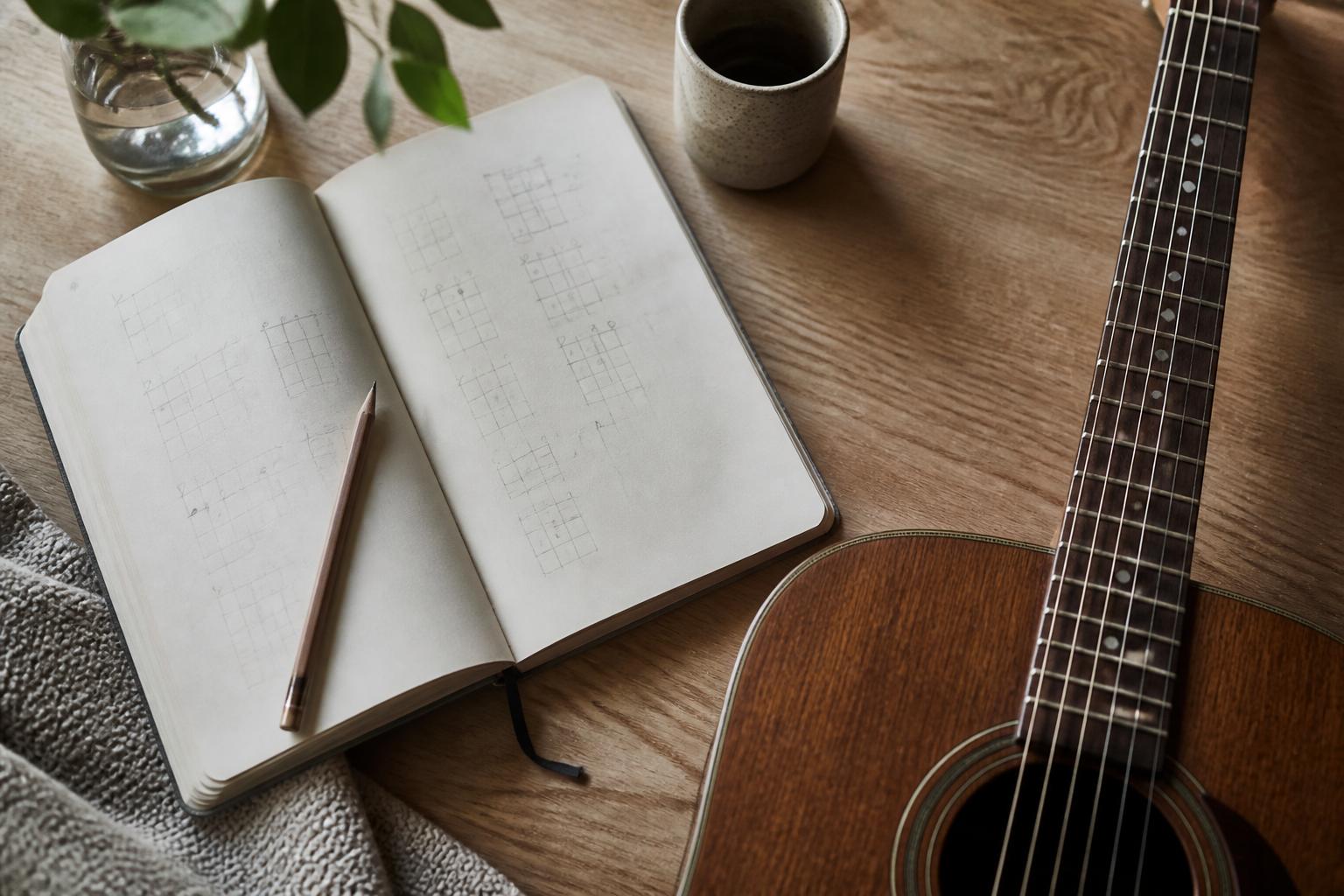
Listen first, name it second.
We might borrow from folk fingerstyle, rock rhythm, singer-songwriter accompaniment, blues vocabulary or clean electric textures. A style is not a box to stay in. It is a set of sounds and gestures that gives us useful material for your hands and ears.
Lessons often begin with listening. What is the guitar doing in the track? Is the rhythm ahead or behind the beat? Which notes make the chord feel open? From there, theory becomes a map rather than a test. Simple notation and chord charts are available whenever they help, but they are never used to make music feel less direct.
A practice that fits an adult life
Consistency matters more than heroic sessions. We design small practice units that can survive a busy week: a two-minute warm-up, one chord change, one rhythm pattern, one verse. You will know what to listen for and what counts as “enough” for that day. If a week goes missing, we simply pick the instrument up again.
What we work on
- Rhythm, strumming and fingerstyle coordination
- Chords, voicings, scales and fretboard orientation
- Learning songs by ear and adapting parts for your voice
- Sound, touch and simple electric guitar setup
- Writing a dependable part for a group
Progress is personal. Some players want to perform; others want a faithful companion for quiet evenings. Both ambitions deserve serious, good-humoured attention.